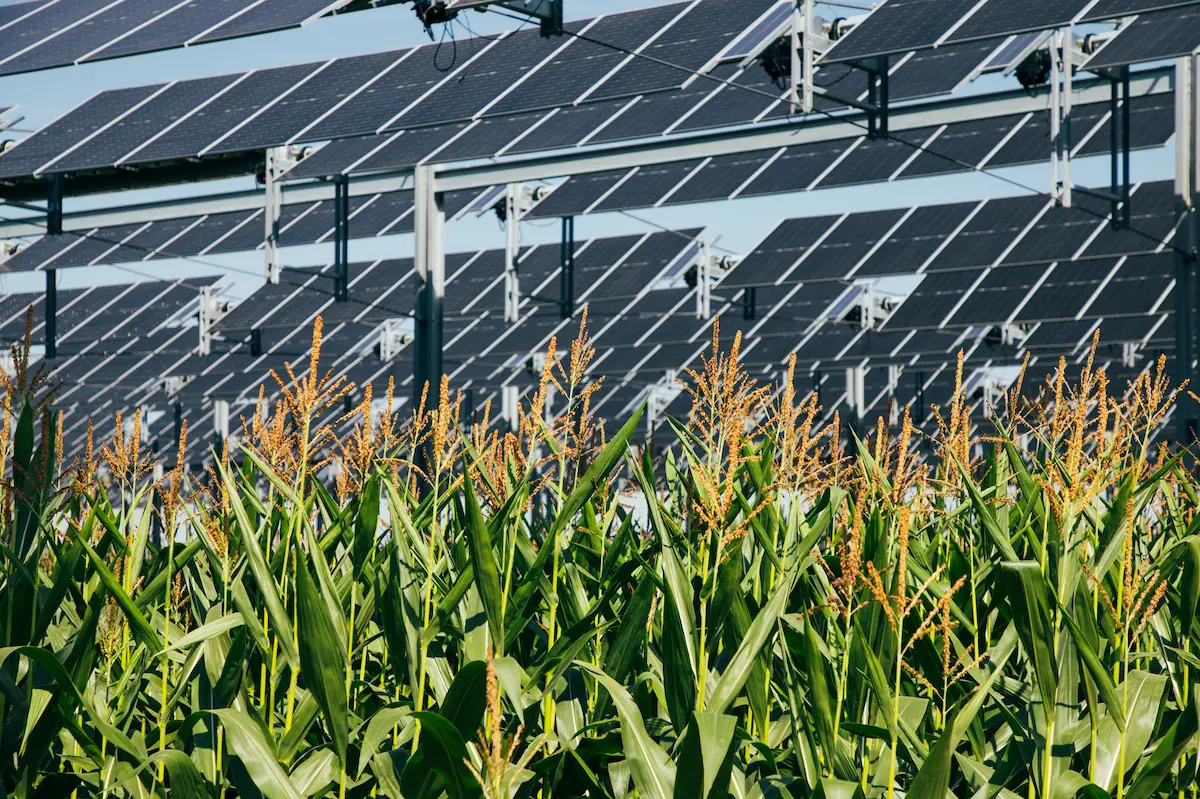
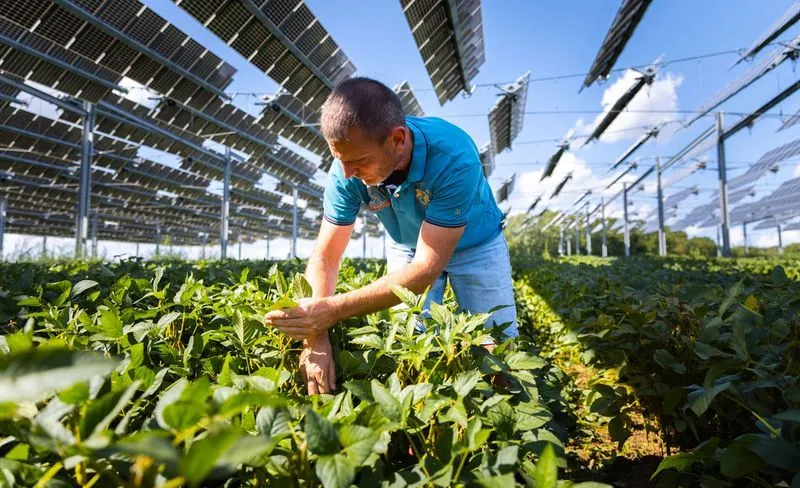
Our agrivoltaic experimentation program
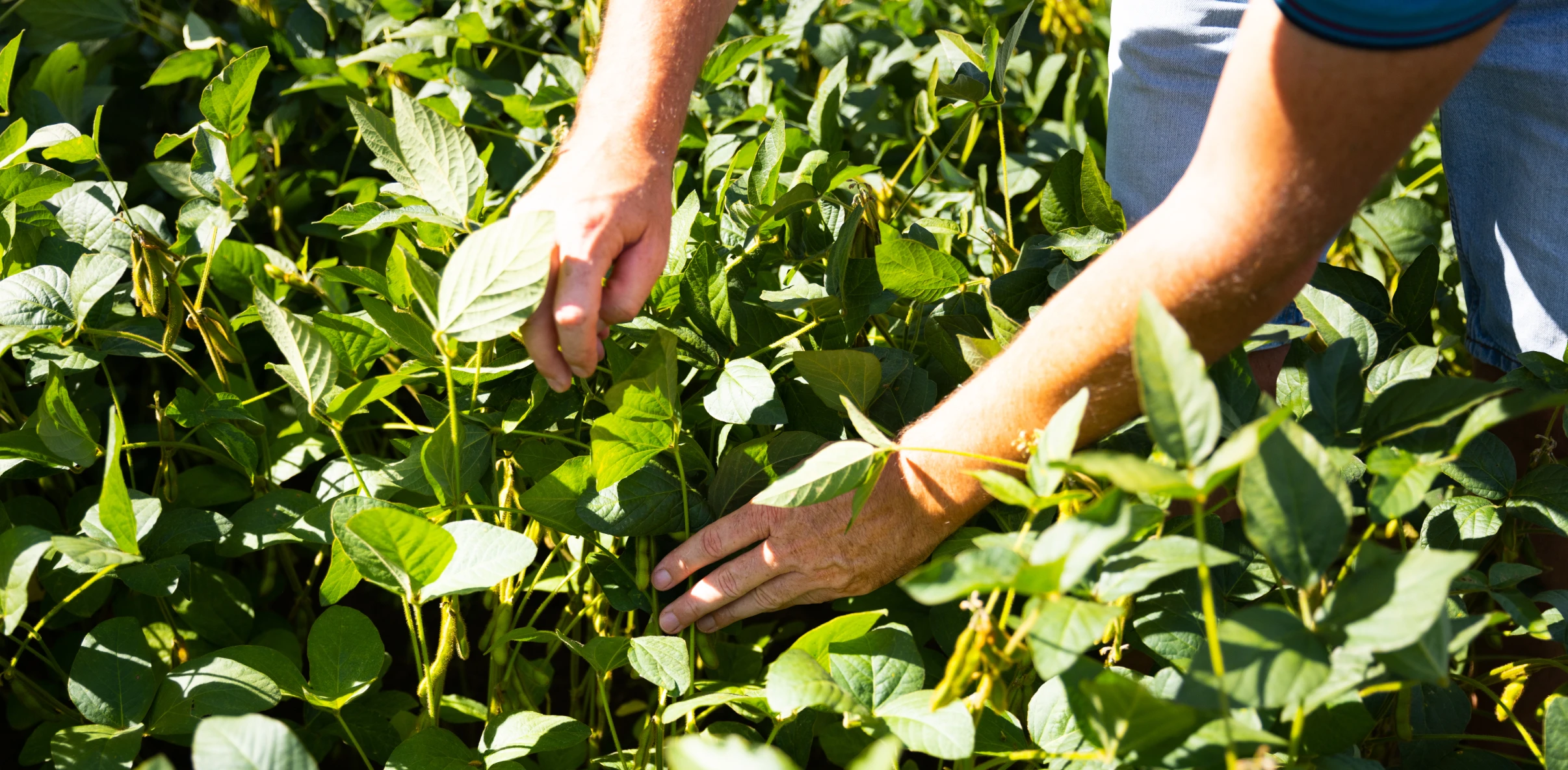
Why a pilot program ?
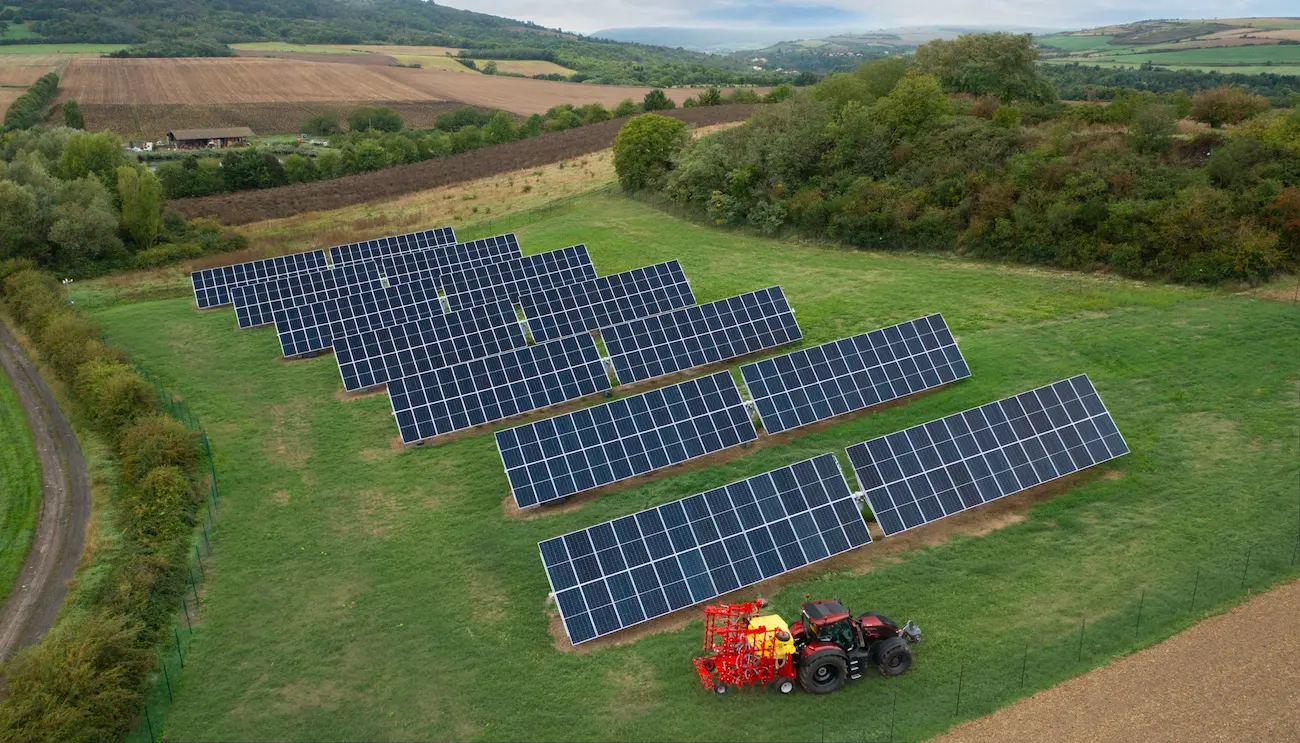
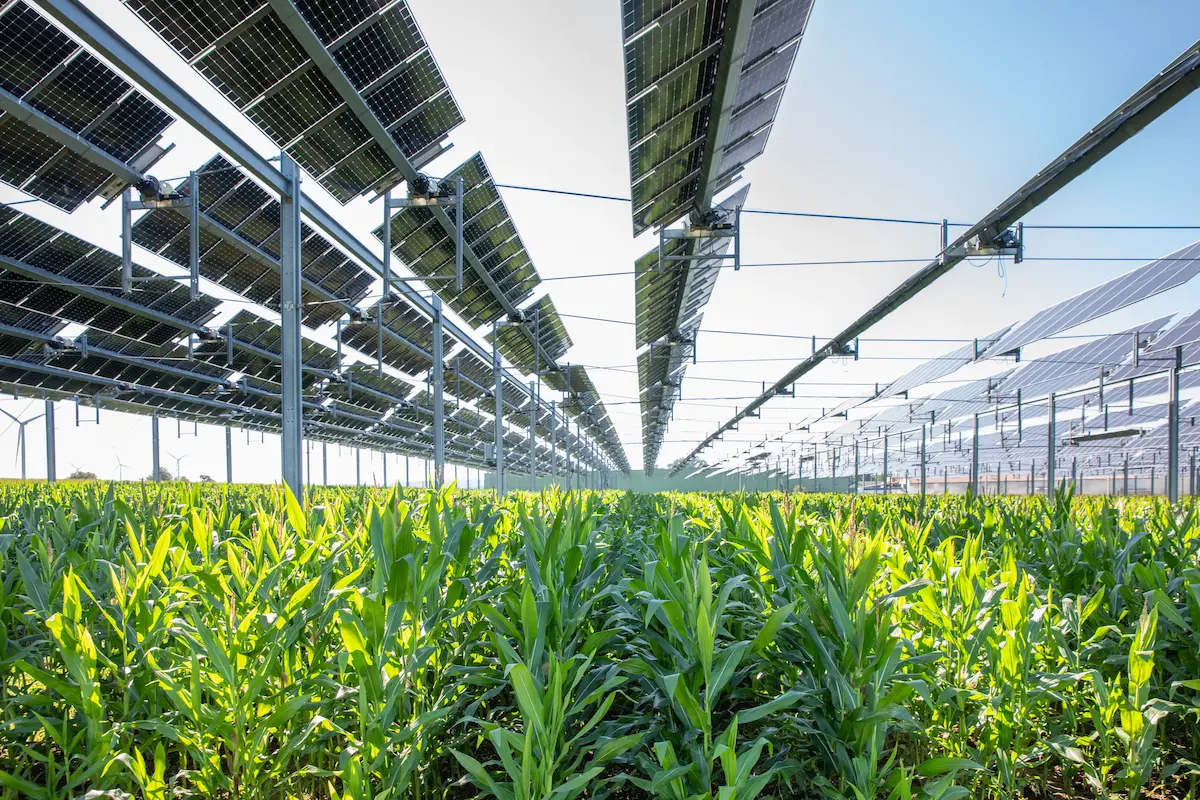
The benefits of agrivoltaics are evident in the field. This is the purpose of the experimental program conducted by TSE at its power plants:
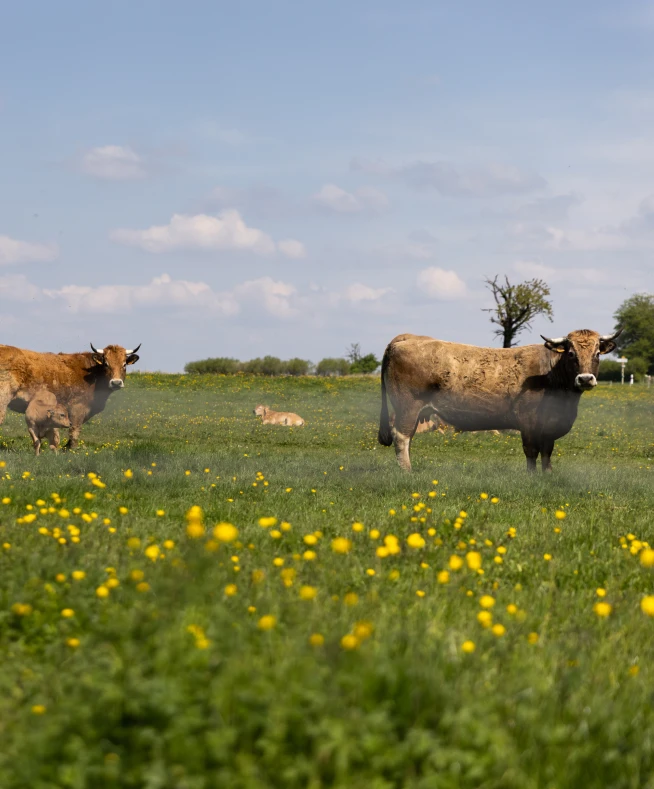
- to test the effects of agrivoltaic solutions on crops and livestock,
- to test seeds and irrigation methods,
- to compile data,
- to compare results with control areas without solar panels,
- to measure agronomic and climatic impacts,
- and to refine the systems in collaboration with our agricultural and scientific partners.

Our agronomic monitoring method
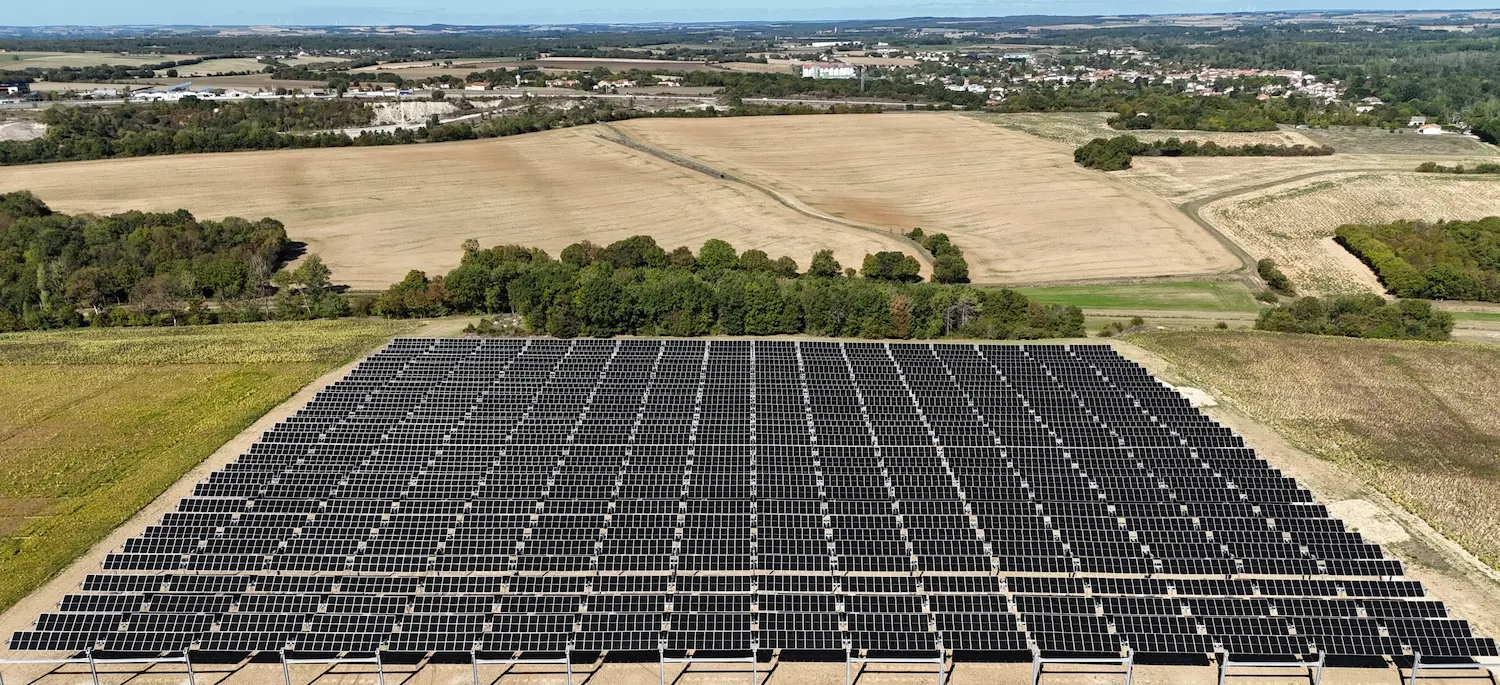
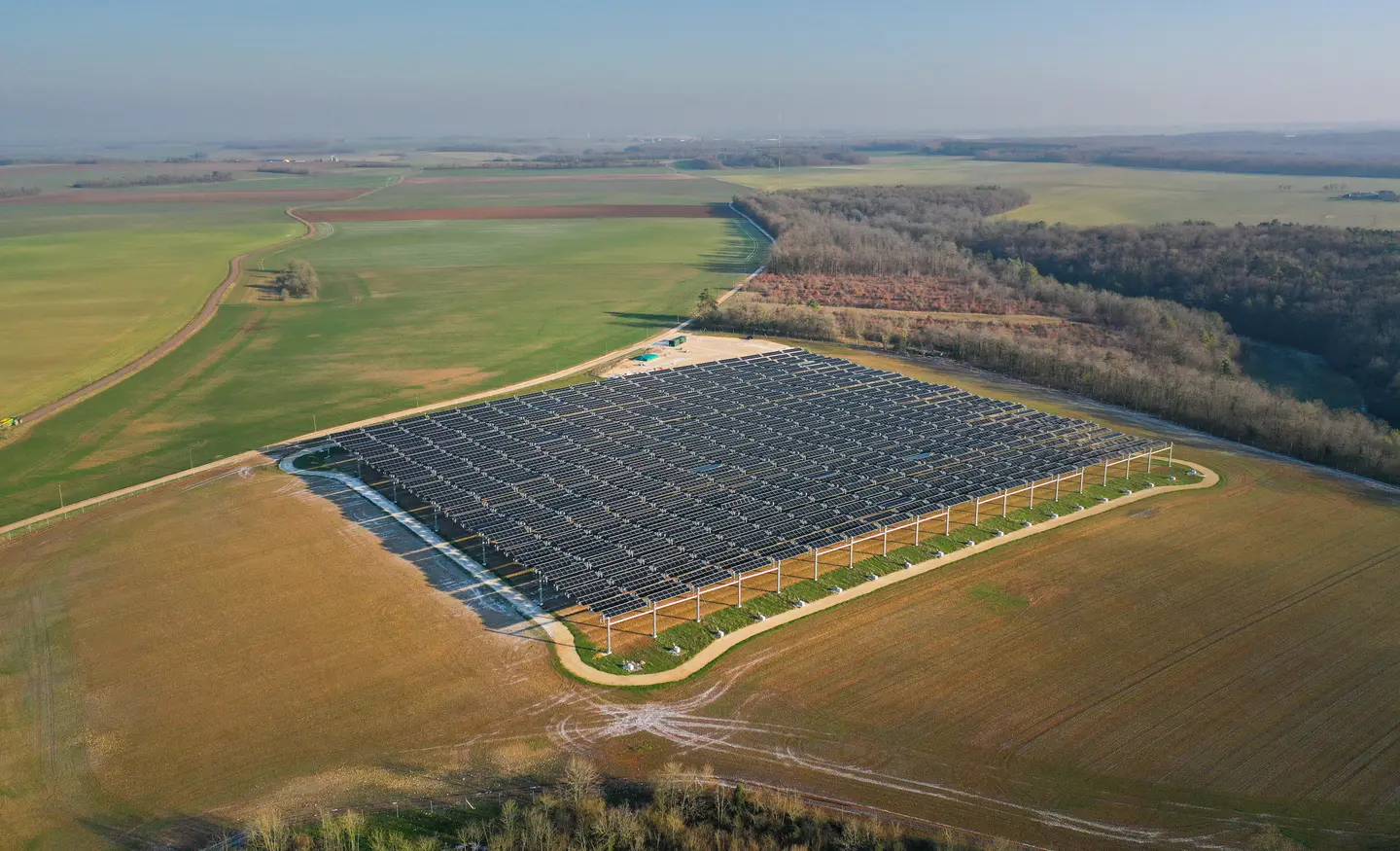
Our program is based on several pilot sites located throughout France. These sites follow a scientific testing protocol that was jointly developed and is carried out with our teams of expert agronomists in plant and animal biology, as well as our scientific and agricultural partners.
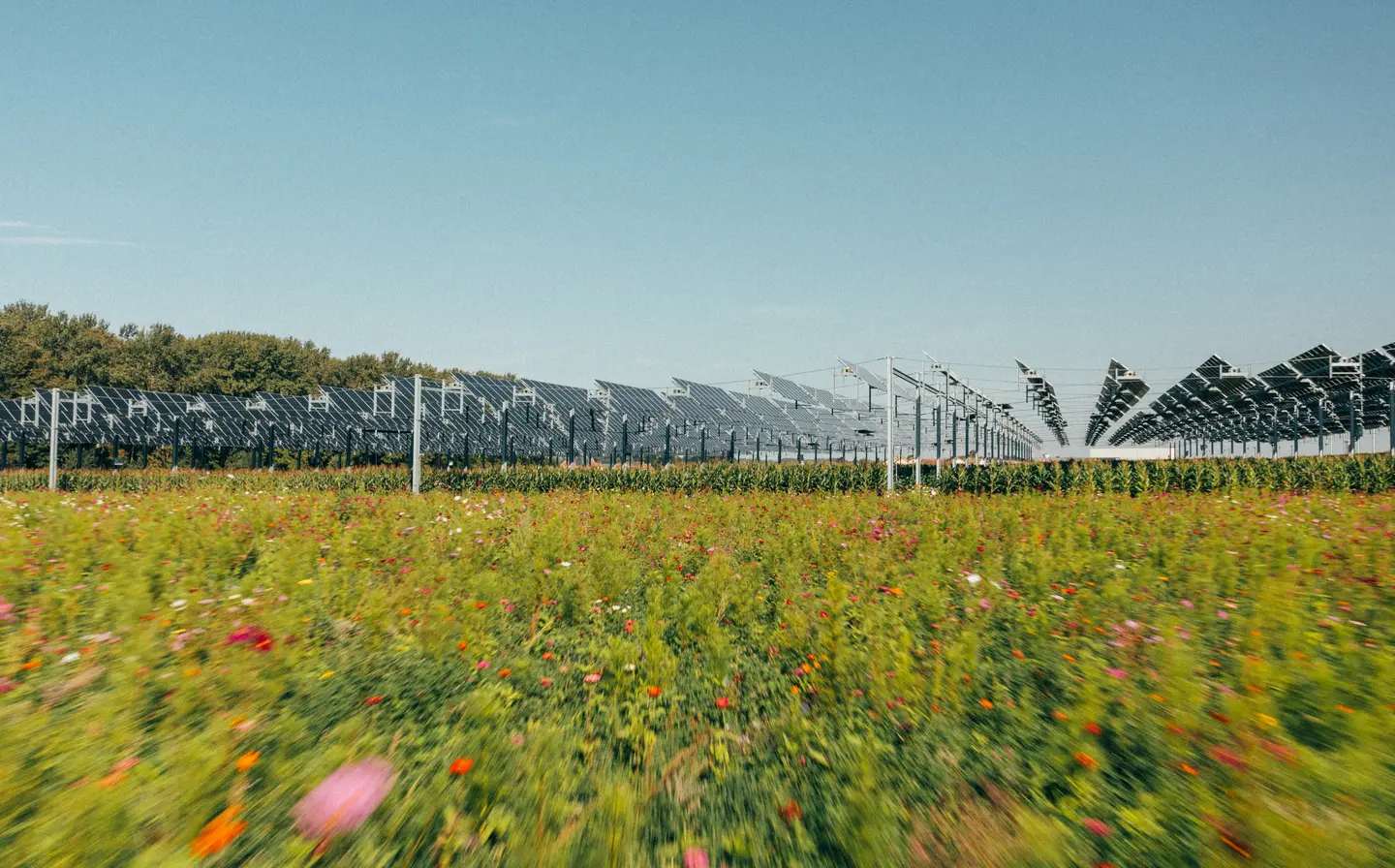
Each agronomic trial is designed to observe the effects of the agrivoltaic system on the microclimate, water balance, yields, crop quality, and animal welfare.
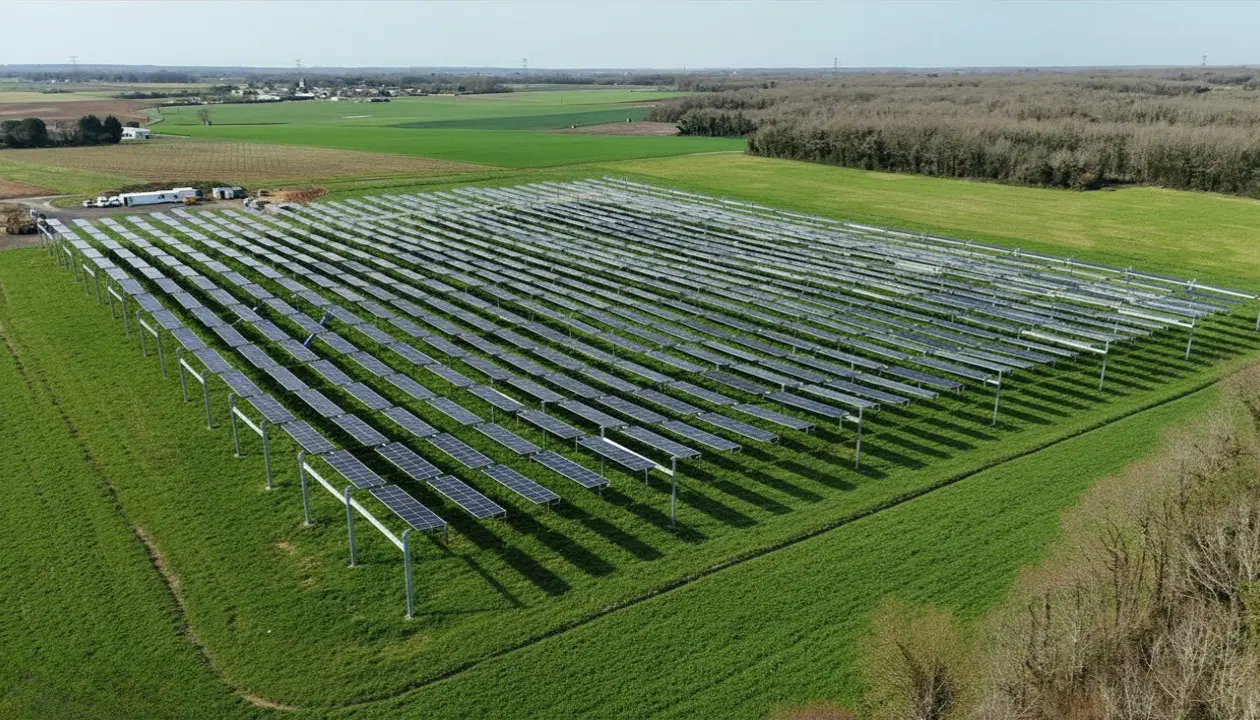
Comparison with a control area not covered by solar panels is essential: it allows us to distinguish between natural variations within a plot and effects that can be attributed to the agrivoltaic solution.

Results of our demonstration program
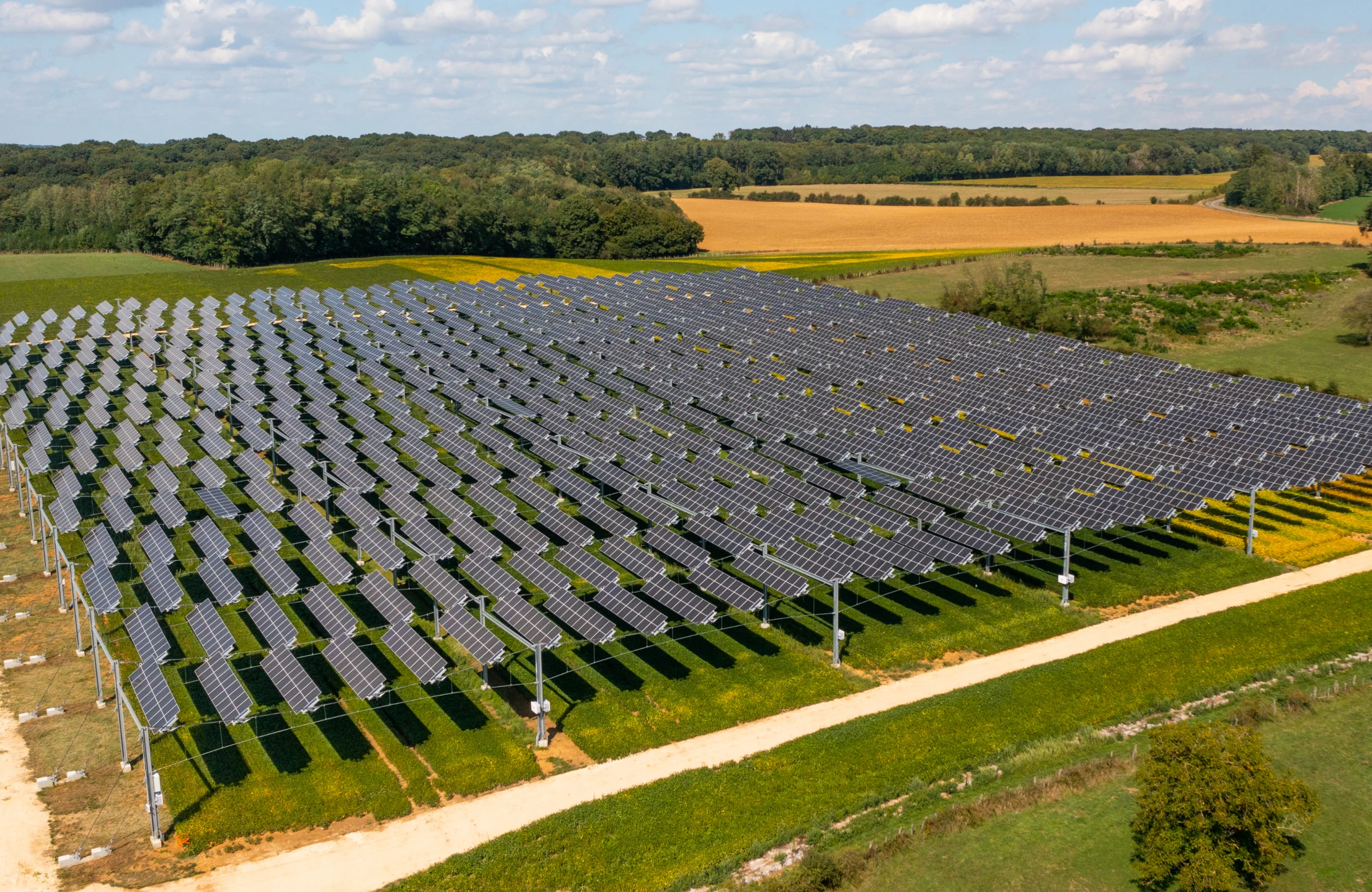
When properly configured and managed using appropriate agronomic practices, an agrivoltaic installation helps to improve the resilience of agricultural land in the face of climatic uncertainties.
TSE conducts its trials over periods of between 3 and 9 years. The initial published results indicate particularly positive effects over several years.
Let's talk about your project
Our agricultural partners









Any questions ?
The control area allows for a comparison between a plot equipped with dynamic solar panels and a similarly managed plot without an agrivoltaic system.
Depending on the site, indicators may include yield, quality, evapotranspiration, temperature, water stress, microclimate, and animal behavior. These are tracked year over year and compared, allowing for the optimization of both yields and the farmer's daily operations.
They must be interpreted on a site-by-site basis. The value of this experiment lies precisely in distinguishing between established results, emerging trends, and areas that still require measurement. At this stage, our results are particularly positive.
.webp)
.webp)