10 questions to ask before committing to an agrivoltaic project

- Verify the developer's reliability : experience, financial stability, and references from farmers already involved.
- Examine contracts and guarantees : commitment duration, responsibilities, financing, and decommissioning.
- Ensure agriculture remains the priority : compliance with regulatory criteria and compatibility with your crops, livestock, and equipment.
- Anticipate co-activity : access to plots, maintenance interventions, and organization of agricultural work.
- Clarify your compensation : amount, indexation, payment schedule, and distribution between owner and operator.
Approached for an agrivoltaic project: 10 questions to ask before you start
Are you a farmer? Before committing to an agrivoltaic project, here are ten concrete points to check to distinguish a serious project from a setup that prioritizes electricity production at the expense of your farming activity. These include: the developer's track record and experience, financing, the type of contract offered, guarantees in case of default, compliance with legal criteria for a truly agricultural project (coverage rate, yield maintenance, reversibility of the installation), remuneration, and verifiable references from the developer.
This is no minor issue. According to the 2025 Agriculture-Viticulture Observatory, published by the BPCE banking group in collaboration with the Ifop institute and based on 1,206 farmers surveyed between February and March 2025, 69% of farmers say they are worried about climate change and 66% believe it is strongly affecting their production.
A report from the Ministry of Ecological Transition published in 2026 confirms this intensification: in 2025, agricultural drought affected 12% of French territory, with 41 departments subject to water usage restrictions for agriculture during the year.
Faced with this reality, agrivoltaics is attracting growing interest: the barometer published by TSE with the Nexio Research institute (1,155 respondents—farmers, agricultural advisors, mayors, and citizens—surveyed between February and March 2026) shows that nearly one in two farmers already has a project or is considering getting involved.
But this same barometer highlights a major friction point shared by all local stakeholders: 95% of farmers, 93% of agricultural advisors, and 85% of mayors consider administrative procedures too complex and the timelines too long. This is precisely what makes choosing the right partner so crucial.
1. How long has the company been in business, and does it have real experience with your type of activity?
Before committing, ask the developer to show you agrivoltaic projects that are already in operation, ideally involving an activity comparable to yours: field crops, sheep, cattle, or goat farming, for example.
Don't just look at the number of announced projects. Check how long the installations have been operating, whether they are subject to agronomic monitoring, and if results are available. This data is essential for evaluating the observed effects on crops, animals, and the farmers' working conditions.
A company capable of presenting official results demonstrates reliability and is therefore an important selection criterion.
{{cta-communique}}
2. How is the agrivoltaic project financed?
In most cases, the project is financed by the agrivoltaic developer, who covers the studies, construction, operation, and maintenance of the installation.
The farmer generally does not have to make an initial investment and receives compensation according to the terms of the contract.
Before signing, check who is responsible for the financing, the developer's financial guarantees, the payment terms, and also who covers the decommissioning costs at the end of the project's life.
3. Who will own the agrivoltaic installation, for how long, and what happens to it at the end of the contract?
In the majority of agrivoltaic projects, the developer remains the owner of the photovoltaic installation throughout the operating period, which is generally between 30 and 40 years.
The farmer makes their land available under a contract but does not become the owner of the panels.
The law requires that this installation must remain reversible at the end of the contract.
4. What kind of contract is being offered, and which clauses should you check?
An agrivoltaic project is generally based on a lease agreement, followed by a long-term lease (bail emphytéotique) if the project goes ahead. But beyond the nature of the contract, it is its clauses that deserve your attention. Before signing, check in particular:
- The duration of the commitment.
- Compensation terms (amount, indexation, payment methods).
- The developer's commitments regarding co-activity, maintenance, upkeep, agronomic monitoring, and facility decommissioning.
- The responsibilities of each party in the event of a disaster or project modification.
- Conditions for site restoration of the plots at the end of operations.
A balanced contract protects both the agricultural activity and the agrivoltaic project. Do not hesitate to have it reviewed by your legal advisor, notary, or Chamber of Agriculture before committing.
To learn more, read our article on the emphyteutic lease agreement.
5. What is the financial stability of the company that will carry your project?
An agrivoltaic project commits your farm for several decades. It is therefore important to inquire not only about the developer's technical experience but also about their ability to finance, build, and operate the facility over the long term.
The goal is not to predict the company's financial situation in 20 or 30 years, but to verify that the project is currently backed by a player with the resources and organization necessary to uphold their commitments over time.
6. Does the project meet agrivoltaic criteria?
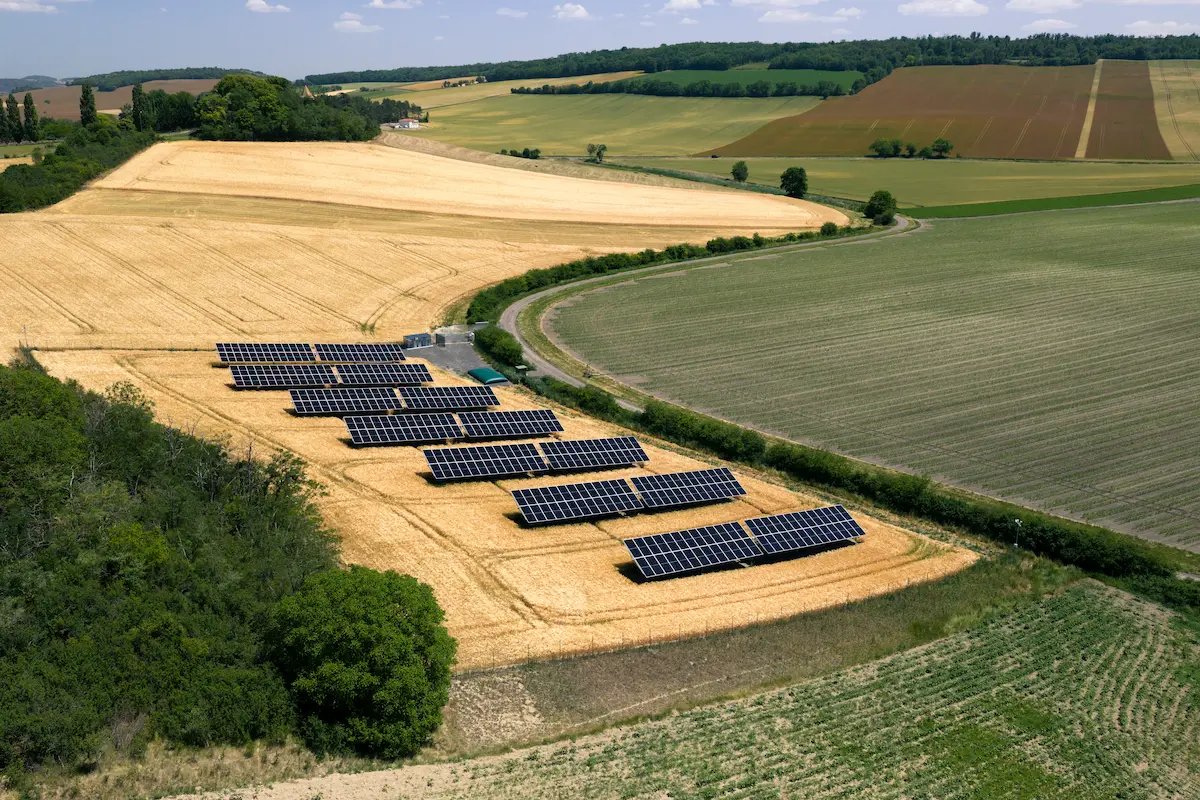
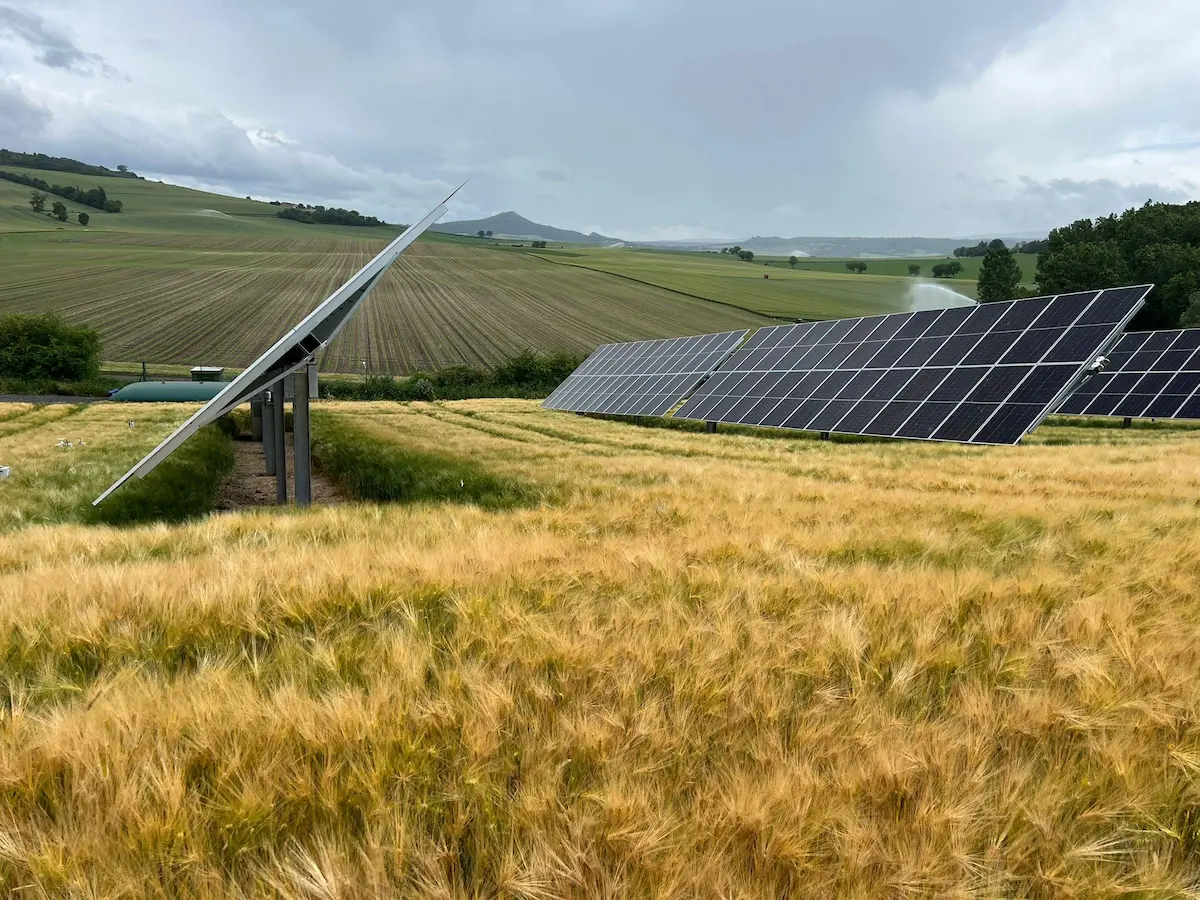
Regulations impose several criteria for an installation to be classified as agrivoltaic. These primarily concern the services provided to agricultural activity, the coverage rate of the plot, the maintaining significant agricultural production or the portion of the surface area that remains effectively usable for agriculture.
Before committing, ensure with the developer that these criteria will be met.
{{cta-article-1}}
7. Is the installation truly compatible with your farming operations and equipment?
An agrivoltaic project must be designed around your farm, not the other way around. Before committing, verify in practical terms that the planned layout will allow you to continue working the plot under good conditions.
Compare it against your actual practices:
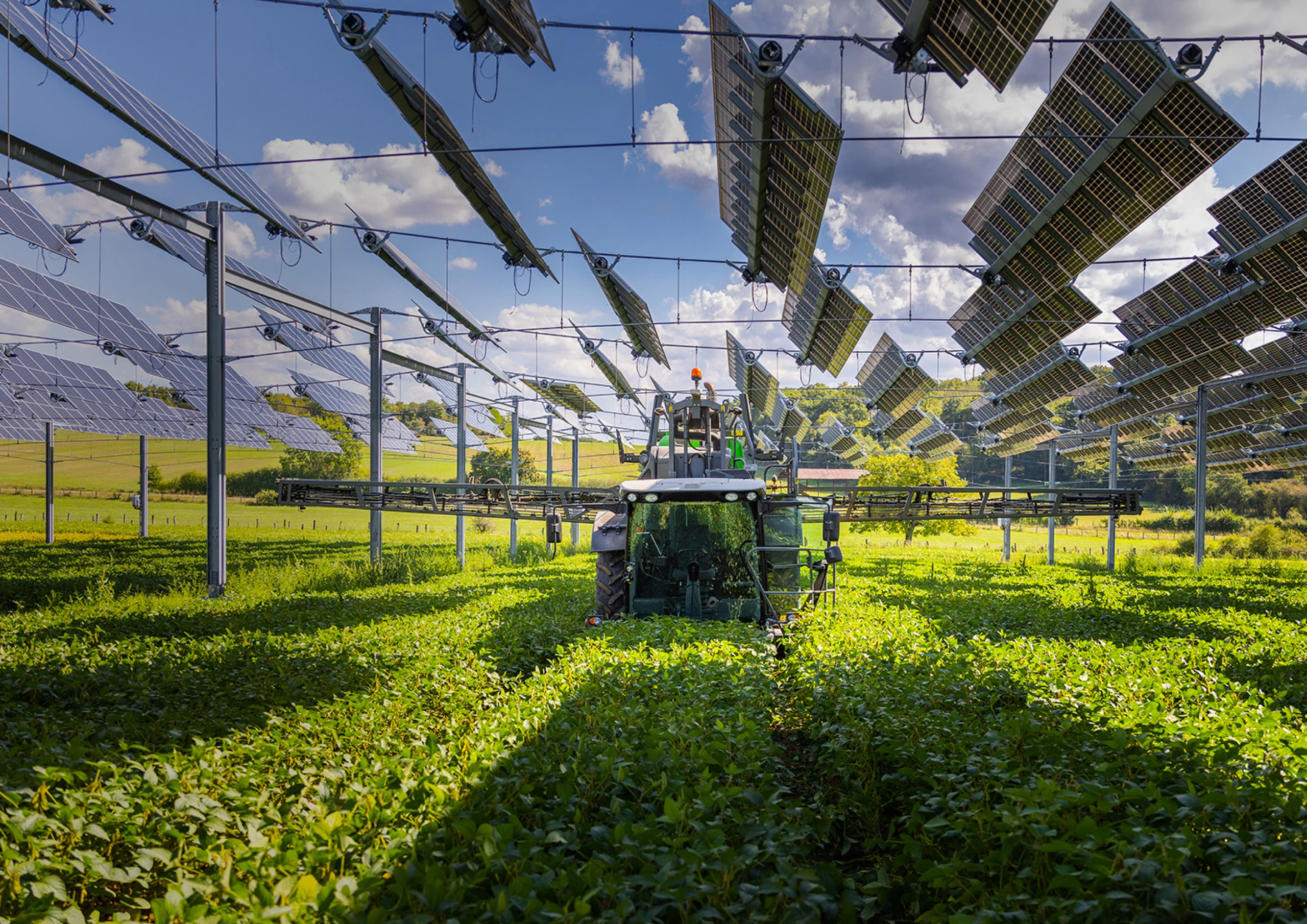
- width and height of your machinery,
- clearance distance between rows of panels,
- ground footprint of the installation,
- turning areas at the end of the plot,
- access to the different parts of the plot,
- or compatibility with an irrigation system.
For field crops, for example, check that your tractors, sprayers, combine harvesters, and other equipment will be able to move between the panels and that you can maneuver without changing your practices, that the height of the structure will be compatible with that of your crops, and that they will receive enough light to promote their growth during key stages.
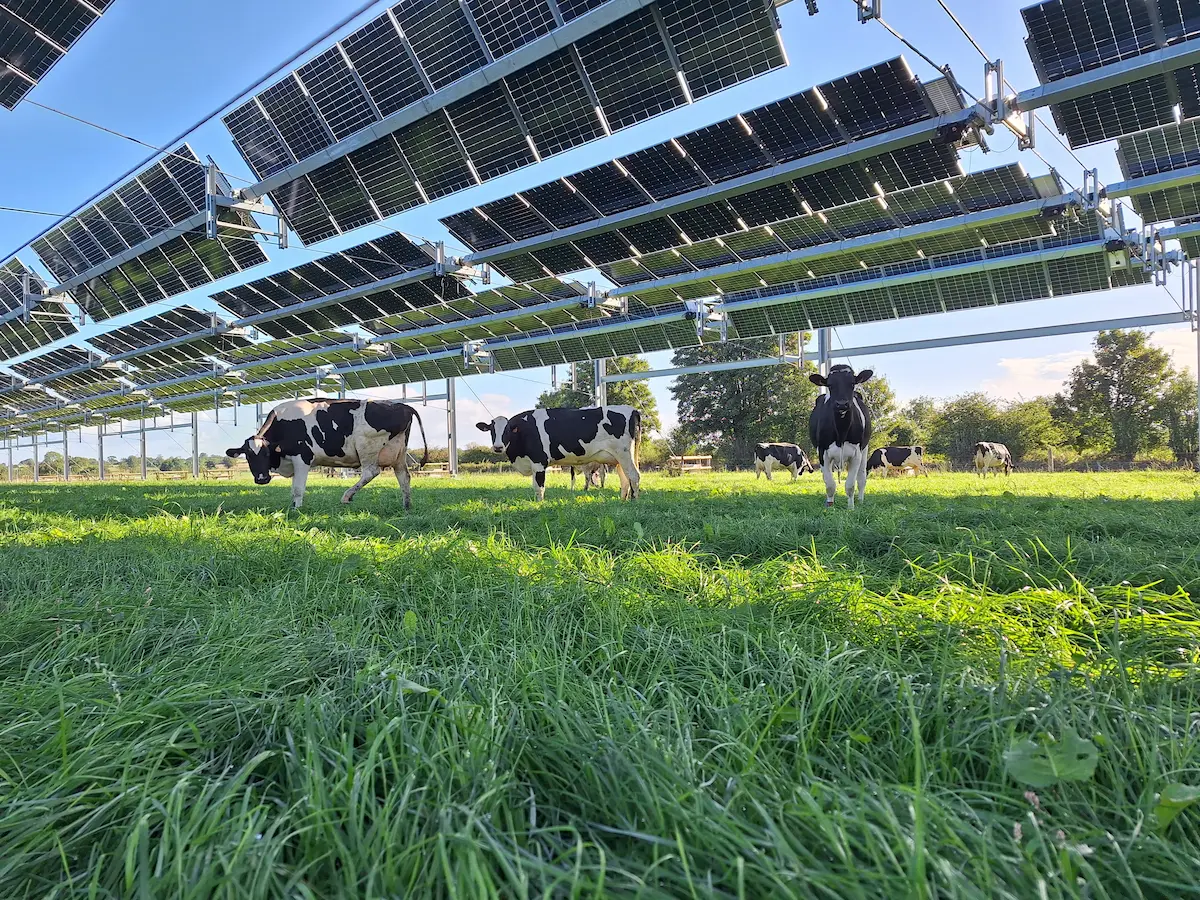
For livestock farming, consider in particular herd movement, fencing, water points, and access to the animals.
Also think about the future of your farm. An installation planned for several decades should not be designed solely for the crop grown in the year of its construction: it must take into account your crop rotation and, as much as possible, any potential changes to your production system.
8. How will co-activity be organized on a daily basis?
Once the agrivoltaic project is in operation, agricultural activity and the operation of the installation will have to coexist on the same plot. It is therefore important to define the rules for this co-activity in advance.
Ask in particular:
- How will maintenance work?
- Who will be able to access the plot and when?
- And how will sensitive agricultural periods be managed : sowing, treatments, spreading, mowing, harvesting, moving livestock, or other operations specific to your farm?
These procedures must be developed with your agricultural calendar in mind so that any work related to the agrivoltaic installation causes as little disruption as possible to your operations.
Also, identify your point of contact once the plant is operational: in the event of a breakdown, unexpected maintenance, or issues on the plot, you need to know who to contact and how.
{{cta-contact-agri}}
9. How will the compensation be calculated and paid?
Compensation for an agrivoltaic project is not standardized: it depends on factors such as the plot's location, its technical characteristics (distance to the substation, topography, necessary work, environmental constraints), and the chosen technology. Before signing, verify the following details:
- Whether the rent is calculated per hectare or based on the installed capacity (MWp).
- Whether the amount is fixed or indexed, and the specific indexation formula used.
- The date from which compensation payments begin.
- The distribution between the landowner and the farm operator when they are not the same person.
The terms of payment in the event of a change in operator or the cessation of agricultural activity. Attractive compensation should not be your only selection criterion. A reputable developer must provide a transparent, sustainable, and clearly defined compensation structure within the contract.
10. Can you put me in touch with farmers who are already working with you?
This is probably the simplest and most effective question to ask.
A developer who has already worked with farms can, and should, allow you to speak with them directly. Any reluctance to provide these types of verifiable references is, once again, a red flag that should be taken seriously.
Discover projects completed by TSE.
FAQ - Getting started with an agrivoltaic project
Sources:
- Agriculture-Viticulture Observatory 2025, BPCE / Ifop (June 2025).
- Ministry of Ecological Transition report on the effects of climate change on French agriculture (2026);
- TSE/Nexio Research barometer on agrivoltaics in local regions (March 2026).
- Law no. 2023-175 of March 10, 2023, on accelerating the production of renewable energy, known as the APER Law (Article L. 314-36 of the Energy Code).
- Decree no. 2024-318 of April 8, 2024, regarding the development of agrivoltaics.
- Order of July 5, 2024, regarding the development of agrivoltaics and the conditions for installing photovoltaic systems on agricultural, natural, or forest land.