Agrivoltaics: What benefits for a municipality?
.webp)

- Local authorities collect tax revenues via IFER, development tax, as well as other taxes and contributions.
- The projects involve local businesses, generating economic benefits : earthworks, civil engineering, electrical work, agricultural and environmental studies…
- Some projects offer direct benefits for local residents : crowdfunding or even reductions on electricity bills via the TSE solar voucher.
- The agrivoltaic project must be economically viable to ensure lasting positive benefits for the region.
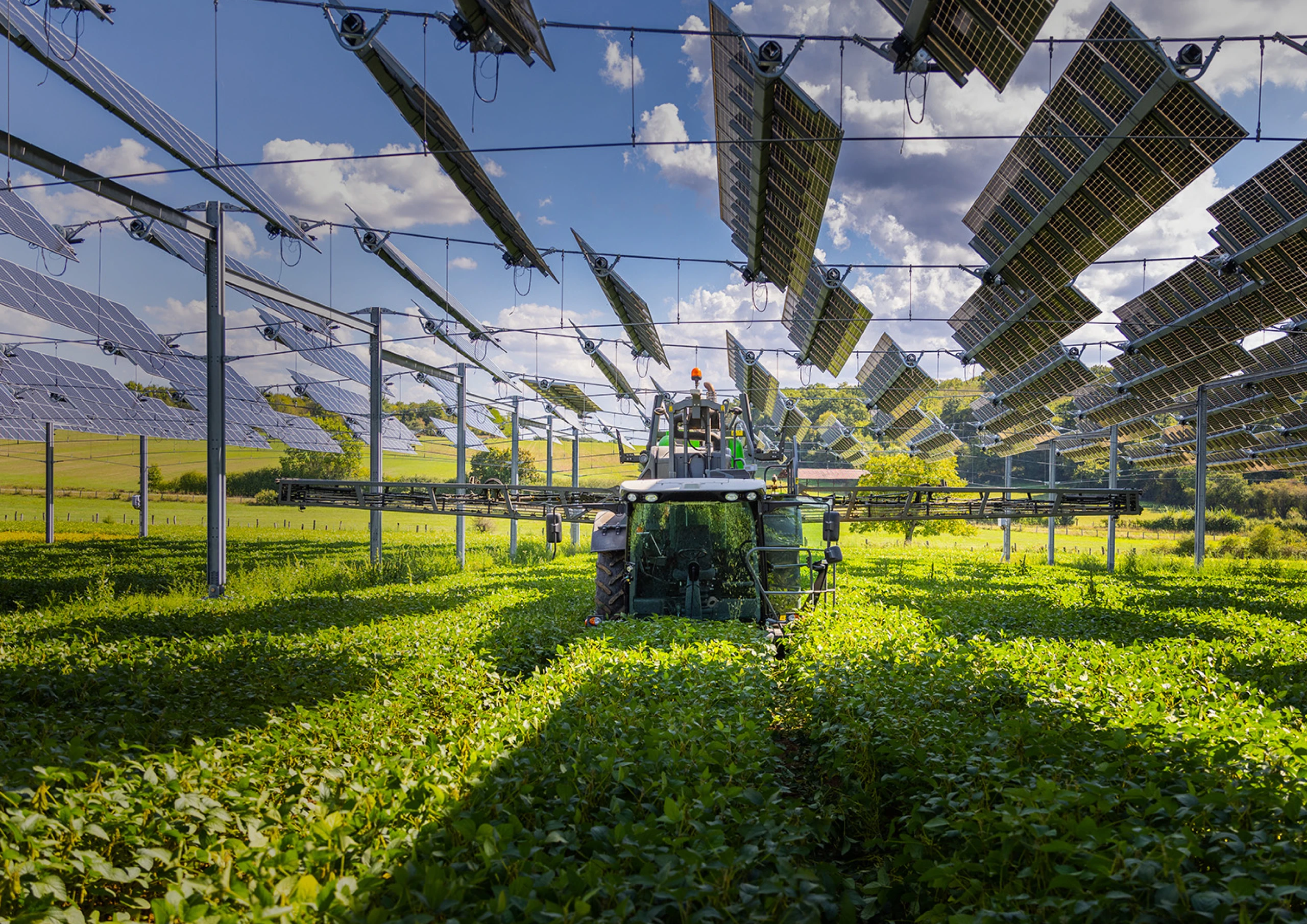
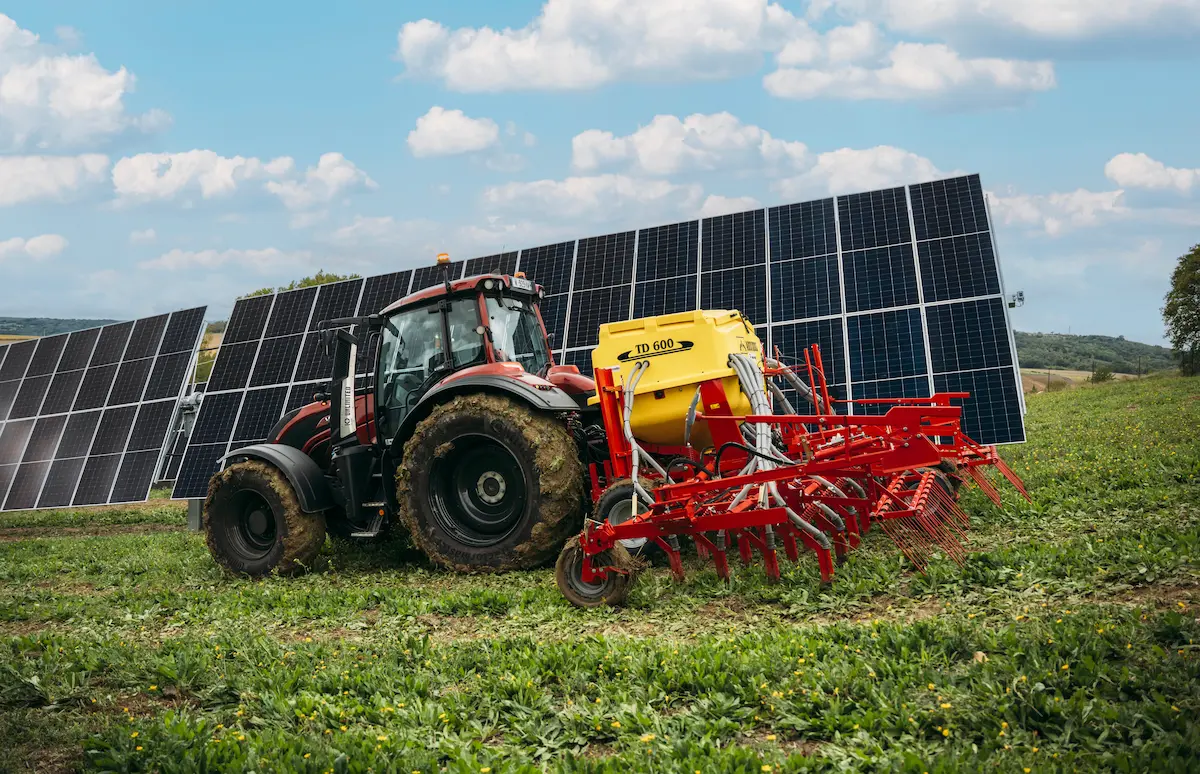
Agrivoltaics combines agricultural production with the generation of carbon-free electricity on the same plot of land. This model makes it possible to reconcile the energy transition with the continuation of agricultural activity.
For local authorities, these projects are not limited to energy generation. They also serve as a source of revenue, a driver of local economic activity and a tool for regional development.
What are the benefits for a local authority?
The benefits of an agrivoltaic project for a local authority can be grouped into three main categories:
- Tax benefits: a regular source of revenue for local authorities.
- Economic benefits: jobs and support for local businesses.
- Regional benefits: access to locally generated, low-cost electricity.
{{cta-contact-agri}}
What sources of tax revenue are available to a local authority?
A local authority hosting an agrivoltaic installation can generate several types of revenue:
MAIN SOURCES OF TAX REVENUE
Most of these revenue streams are recurring and predictable, particularly the IFER.
How does the IFER work?
The IFER is calculated based on a rate per kilowatt of installed capacity:
- 3,542 € for the first 20 years of operation.
- 8,51 € after 20 years.
The revenue from the IFER is distributed among local authorities as follows:
Testimonial from Jean-Marie Bertin, Mayor of Amance, between 2008 and 2026
In Amance, in Haute-Saône, an agrivoltaic project led by a farmer and TSE generates around €6,000 a year for the local council and the wider local authority area.
Jean-Marie Bertin, Mayor of Amance, a village with a population of 670, sums up the benefits of the scheme as follows:
“In our municipality, residents have welcomed the project led by a farmer and TSE. Beyond the generation of renewable energy, there is a tangible benefit for local authorities thanks to the IFER. It provides additional revenue that bolsters local finances. For our municipality and our inter-municipal authority, the amount is around €6,000 per year. Rural areas are hosting this infrastructure, so it is only right that they should benefit from a tangible return. The open days were also very well received locally.”
{{cta-custom-1}}
What are the local economic benefits?
Agrivoltaic projects generate economic benefits right from the construction phase by creating temporary jobs on the construction site.
The construction phase may involve various local businesses and organisations for several months, such as:
- earthworks contractors,
- electricians,
- building tradespeople.
The same applies to agronomic monitoring and preliminary studies. These tasks are entrusted to the chambers of agriculture and regional consultancy firms.
These services help to boost the local economy beyond the construction site itself.
{{cta-contact-agri}}
How do residents benefit from the project?
Residents can be involved in the project through various initiatives.
Crowdfunding
Crowdfunding allows residents to invest directly in the project.
Direct reductions on electricity bills
The TSE solar voucher is a mechanism to directly reduce the electricity bill for residents living near certain projects.
Specifically, TSE partners with an energy provider to offer, in certain areas:
- a €150 annual reduction
- for 5 years.
These schemes are still emerging but help engage residents in the project by making it more tangible.
CTA : {{cta-article-1}}
How does the economics of an agrivoltaic project work?
The economic viability of an agrivoltaic project primarily relies on electricity sales.
The average observed cost is generally between €300,000 and €500,000 per installed hectare.
The main varying factors are:
- the technology used,
- the connection distance at the source plant.
These revenues are intended to finance:
- repayments of loans,
- operation and maintenance,
- taxes and duties,
- the agricultural income,
- investor compensation investors.
The more competitively priced the electricity, the more economically sound the project, and the more sustainable the benefits for the region.
{{cta-contact-agri}}
FAQ - Agrivoltaics: Benefits for Municipalities

.webp)