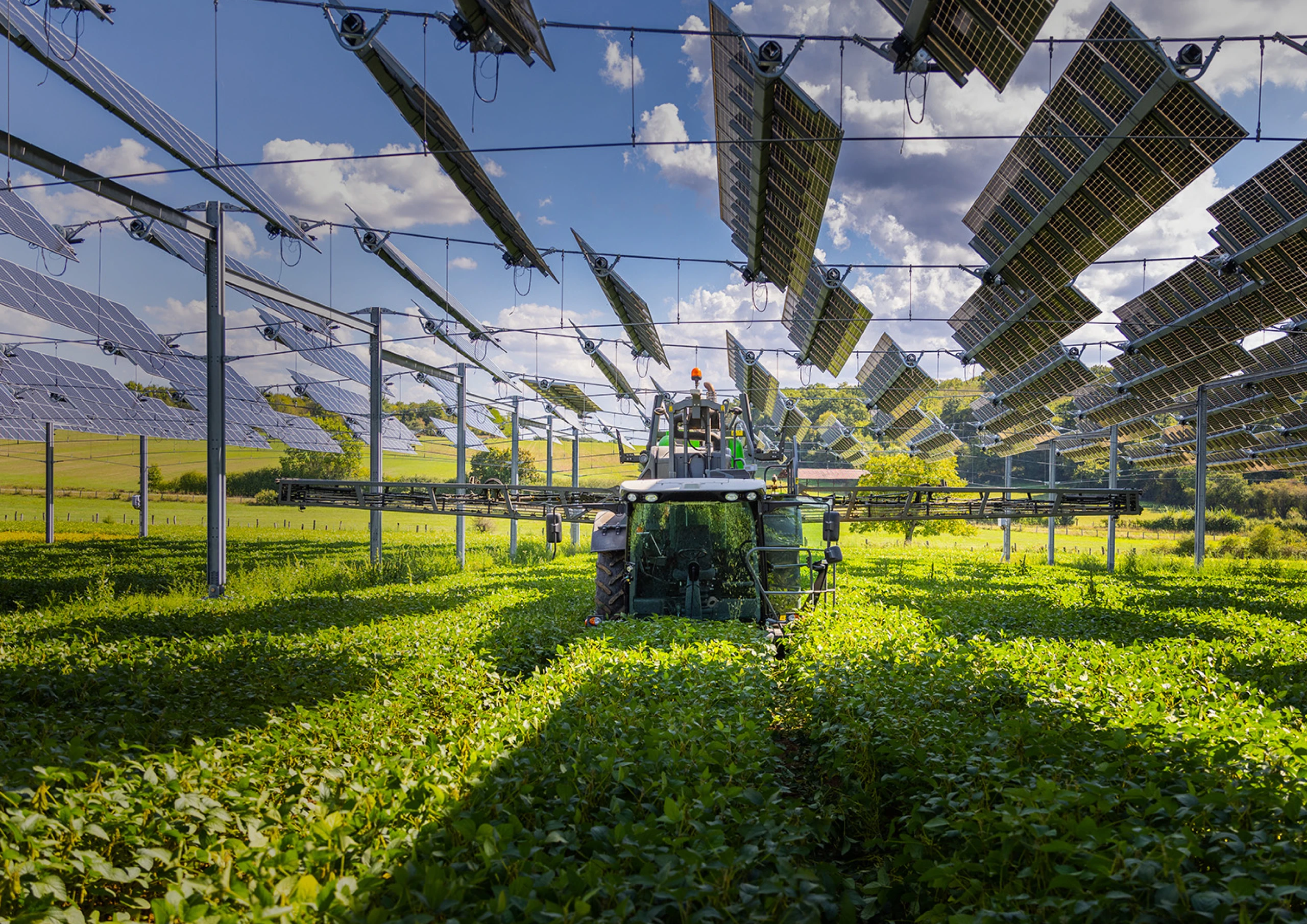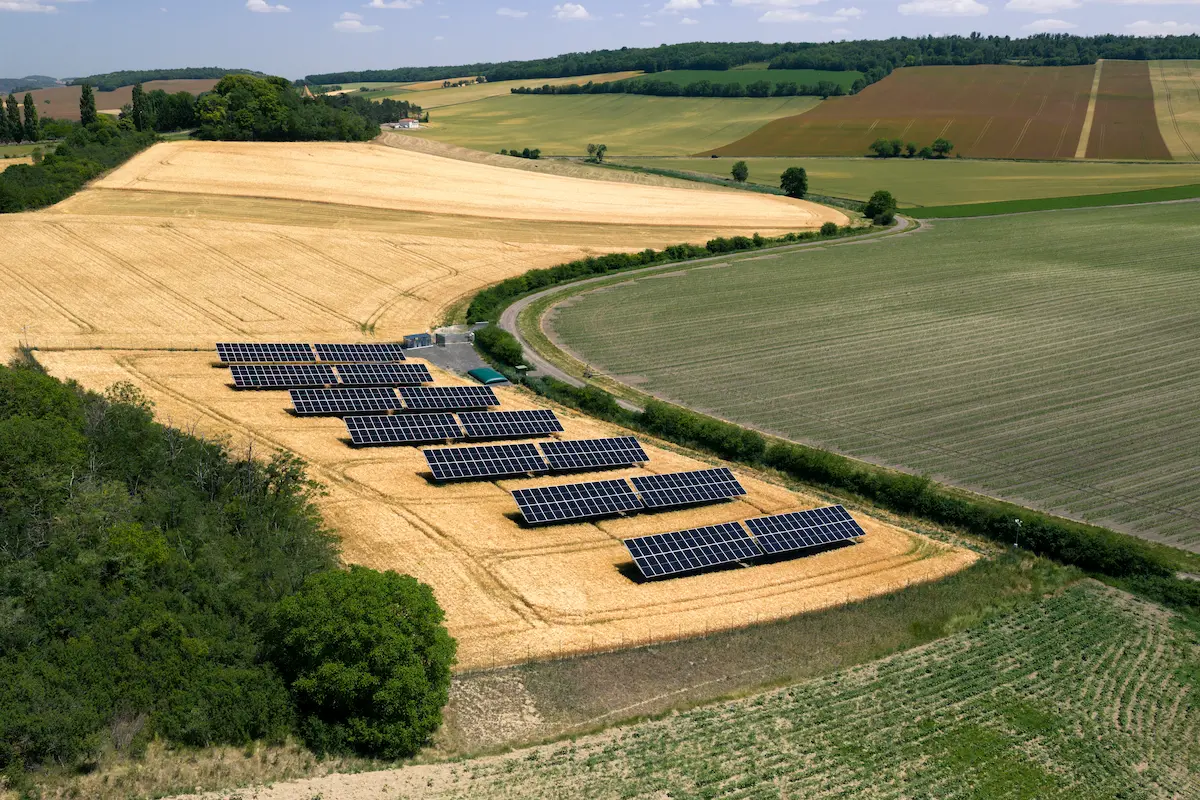
Agrivoltaics: What are the benefits for a farmer?

Agrivoltaics provides real and tangible value to local farmers: annual rent, co-financed equipment, and in some cases, a share of electricity sales revenue. All while benefiting from crop and animal protection. This creates a hybrid model combining long-term supplementary income and agronomic services.
Agrivoltaics: What are the benefits for a farmer?
Key points
  • Agrivoltaics helps protect crops and animals from climate hazards while maintaining agricultural activity on the plot.
  • It provides a long-term supplementary income for the farmer, primarily through annual rent.
  • Some schemes allow for a share in electricity sales revenue, in addition to the rent.
  • Projects can include co-financed agricultural equipment (hedges, watering troughs, farm machinery, infrastructure).

What income does an agrivoltaic project generate?


Thanks to agrivoltaics, farmers typically receive, between €2,000 and €4,000 per hectare per year, in exchange for making their plot available for an agrivoltaic project. This amount may be shared if the landowner and the farmer are different entities.

Economic indicator Observed data
Remuneration range Between €2,000 and €4,000 per hectare per year.
Distribution (TSE case) Often 70% for the operator and 30% for the landowner.
Lease duration Generally between 20 and 40 years.

Note

Some contracts index revenues based on installed capacity rather than surface area, and include an automatic adjustment if the technology evolves, for example when installing more efficient panels.

{{cta-contact-agri}}

Can an agrivoltaic project also finance agricultural equipment?

Yes. In addition to the rent received, an agrivoltaic installation project can include investments that directly benefit agricultural activity, such as:

  • the equipment agricultural,
  • installation of watering troughs for livestock,
  • the planting of hedges.

{{cta-custom-1}}

How can a farmer benefit from the revenue generated by electricity production?

A farmer can receive a portion of the revenue generated by electricity sales without becoming a shareholder in the agrivoltaic project.

What remuneration mechanisms exist?

Several schemes allow farmers to be associated with the economic performance of the installation:

Variable share indexed to electricity production
Remuneration varies depending on the amount of electricity produced by the photovoltaic power plant.
+
Additional contribution paid by the developer
An additional payment may be contractually agreed on top of the fixed rent.

Why are these schemes attractive to farmers?

These mechanisms allow farmers to benefit from the economic potential of the agrivoltaic project without bearing the financial and legal complexities of taking equity in the project company.

What role do agricultural cooperatives play?

Some agricultural cooperatives develop collective stakes in agrivoltaic projects. This approach enables pooling risks and the value created across the territory.

{{cta-article-1}}

Understanding the profitability of an agrivoltaic project

The viability of an agrivoltaic project depends on a balance between production costs, electricity revenues, and redistribution to agricultural stakeholders.

In France, the cost of an agrivoltaic installation generally ranges between €300,000 and €500,000 per hectare, depending on the technology used.

Revenues from the sale of photovoltaic electricity must cover several expense and remuneration items:

  • repayment of the loan,
  • operating costs (maintenance, insurance, technical management),
  • taxation of the project,
  • remuneration of investors,
  • remuneration of the farmer.

The success of agrivoltaic projects hinges on the ability to reconcile two demands: ensuring a balanced remuneration for agricultural and local stakeholders, while preserving the competitiveness of electricity prices.

Testimonial from Benjamin and Fabienne Vion, EARL Toukipousse in Bouère (53)

“This agrivoltaic project provides us with a complementary and stable income for our farm, while securing a low-potential plot of land. The remuneration is indexed to the installed power, not the surface area, which seems coherent to us. We signed a 40-year long-term lease with TSE. It's also important to know that the remuneration evolves with the installation's performance: if the structure is modernized one day, for example with more efficient panels, we will directly benefit from it.”

Key takeaway

Agrivoltaics combines agricultural production and solar electricity generation on the same plot of land. Strictly regulated by the APER law, agrivoltaics must also provide at least one of the following services:

· Improvement of agronomic potential and impact,
· Adaptation to climate change,
· Protection against hazards,
· Improvement of animal welfare.

{{cta-contact-agri}}

Agrivoltaics: What benefits for a municipality?
Discover the TSE x France Agricole white paper: Agrivoltaics, adding value to regions
Do you have an agrivoltaics project?
Do you have a CPPA project?