Agrivoltaics, an ally in mitigating the impact of climate change on field crops
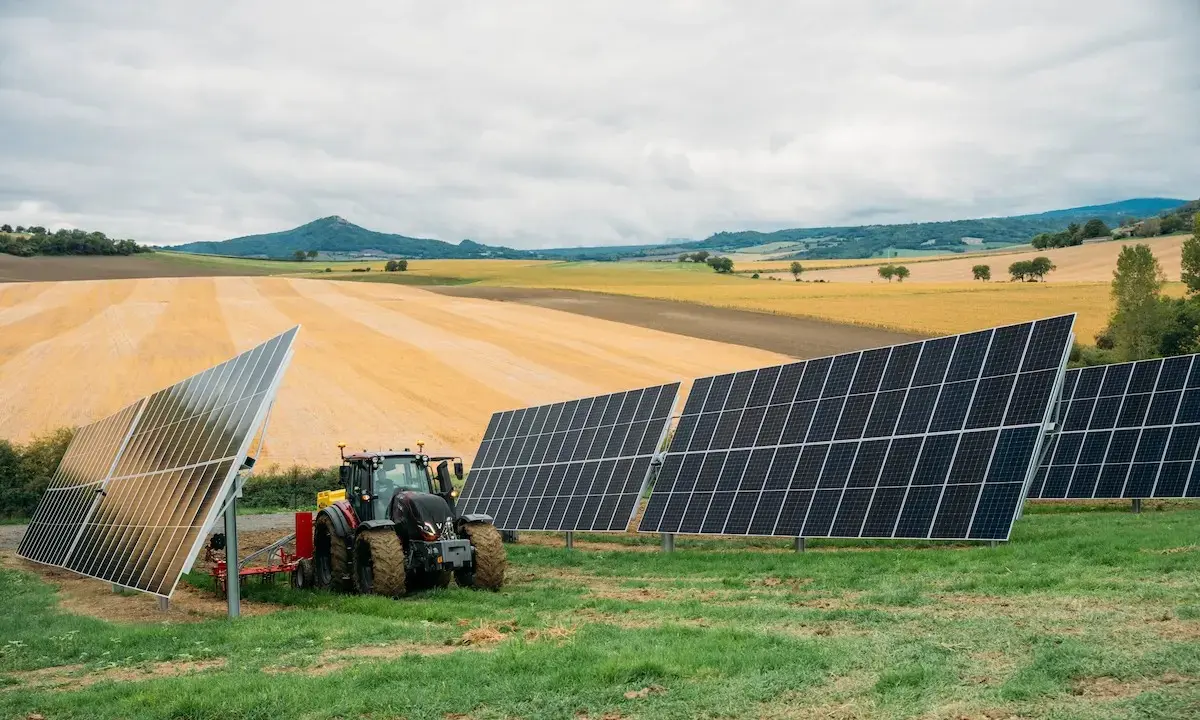

- Climate adaptation of field crops : agrivoltaics protects crops against heat, drought and other hazards (frost, hail, wind) by creating a microclimate thanks to the shading of solar panels.
- Results measured in the field : TSE experiments show a significant reduction in water stress (up to — 57% for Amance soybeans) and a decrease in evapotranspiration, and therefore in water requirements.
- Economic benefits and sustainability This practice combines agricultural and energy production, offering additional income to farmers while strengthening resilience to climate change.
Agrivoltaics, a solution to climate hazards
A lever for adapting to drought and heat peaks
By 2050, projections predict an average rise in temperatures of +2.7°C, accompanied by more frequent and more intense episodes of drought. Farmers therefore seek to preserve their crops and the economic viability of their farms.
The priorities: to limit the pressure on thewater resource, protect crops against excessive sunlight and heat peaks.
Among the solutions explored,agrivoltaicsstands out. Often associated with outdoor breeding, this model also demonstrates its interest in crops. The plants benefit from the microclimate created byThe shading of solar panels, which moderates climatic excesses.
{{cta-1}}
Additional income to secure operations
At the same time, this approach makes it possible to generate additional income, thanks to the rents received, helping to strengthen the financial stability of farms in the long term.
{{cta-contact}}
Concrete results from TSE experiments
Pilot sites to measure the concrete impact of agrivoltaic solutions
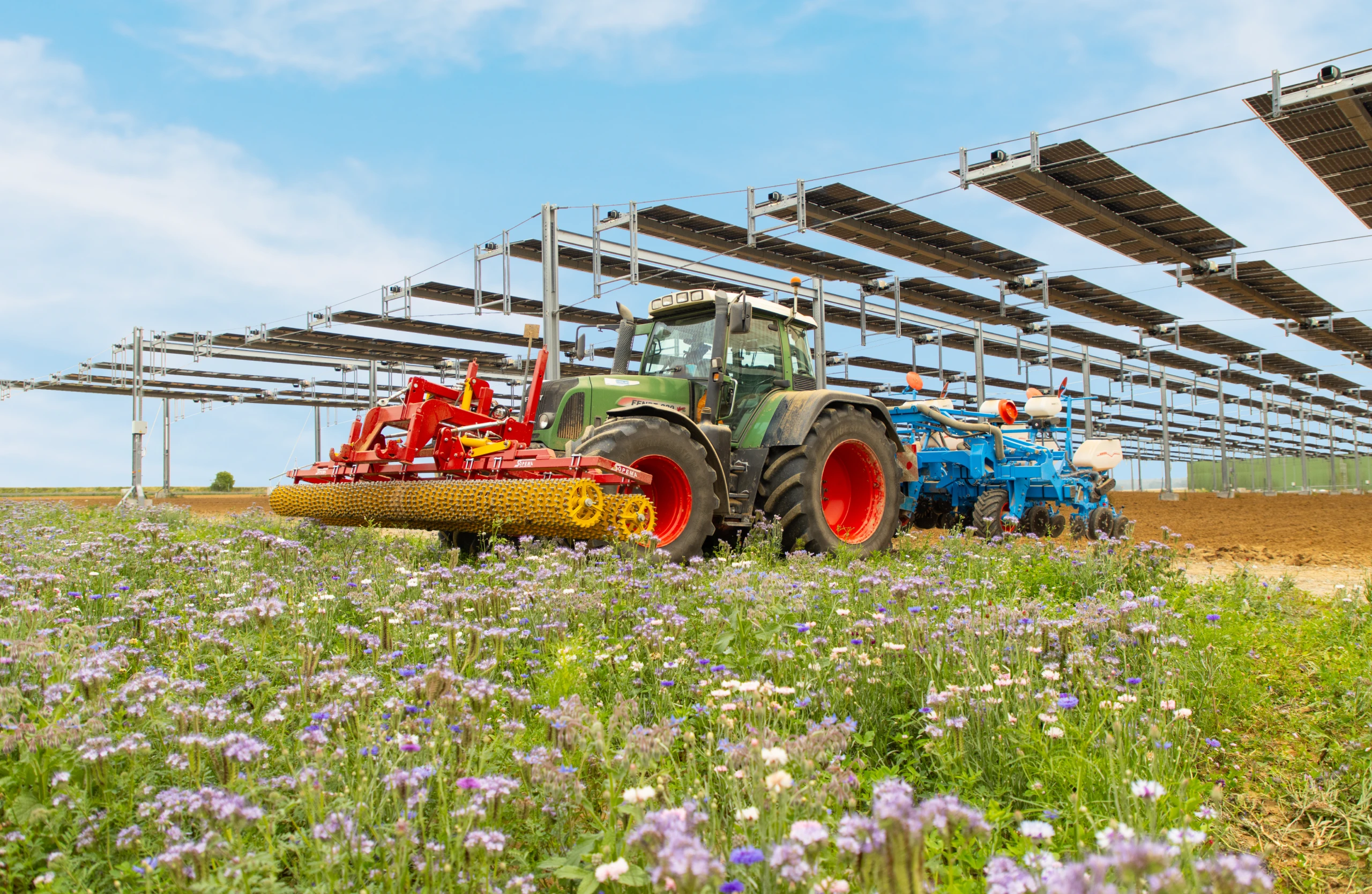
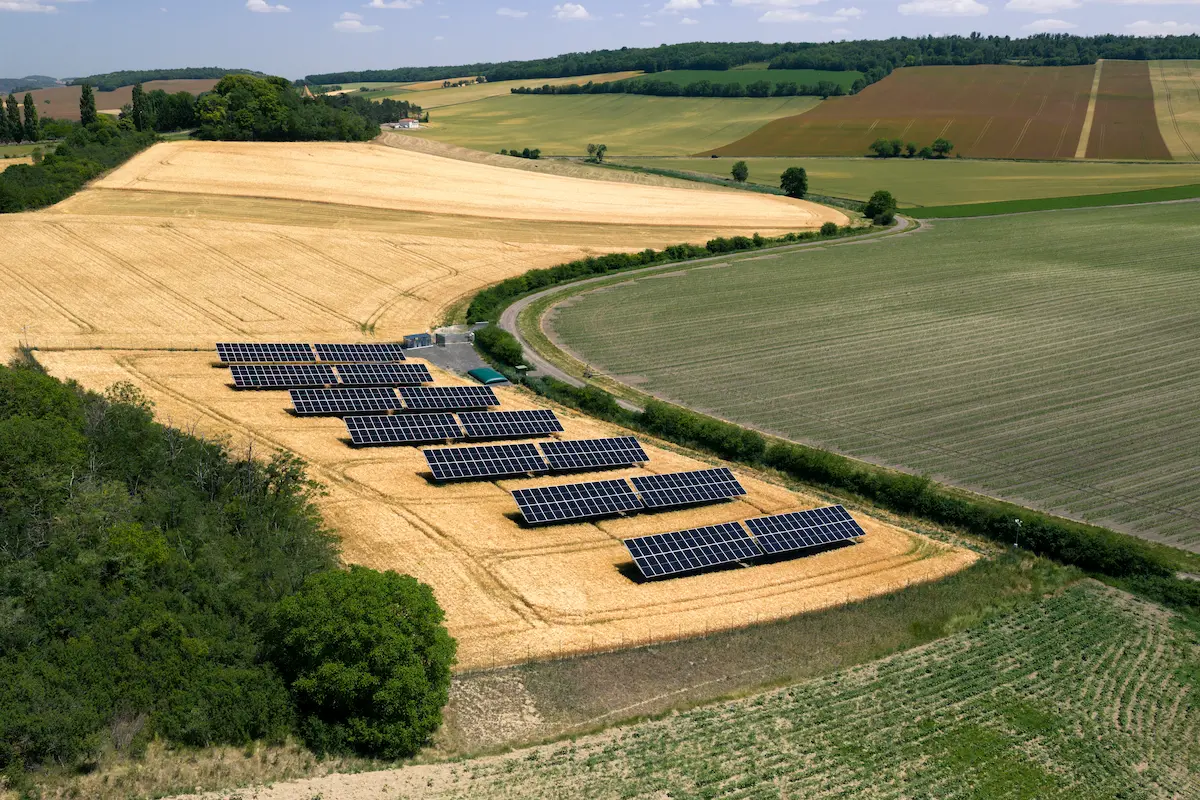
Since 2022, TSE has been conducting experiments on four pilot sites located in Somme, Calvados, Côte-d'Or and Haute-Saône. These tests demonstrate that it is possible to combineagricultural production, renewable energy production, sustainable water managementand long-term economic viability.
A measured impact on crop water stress
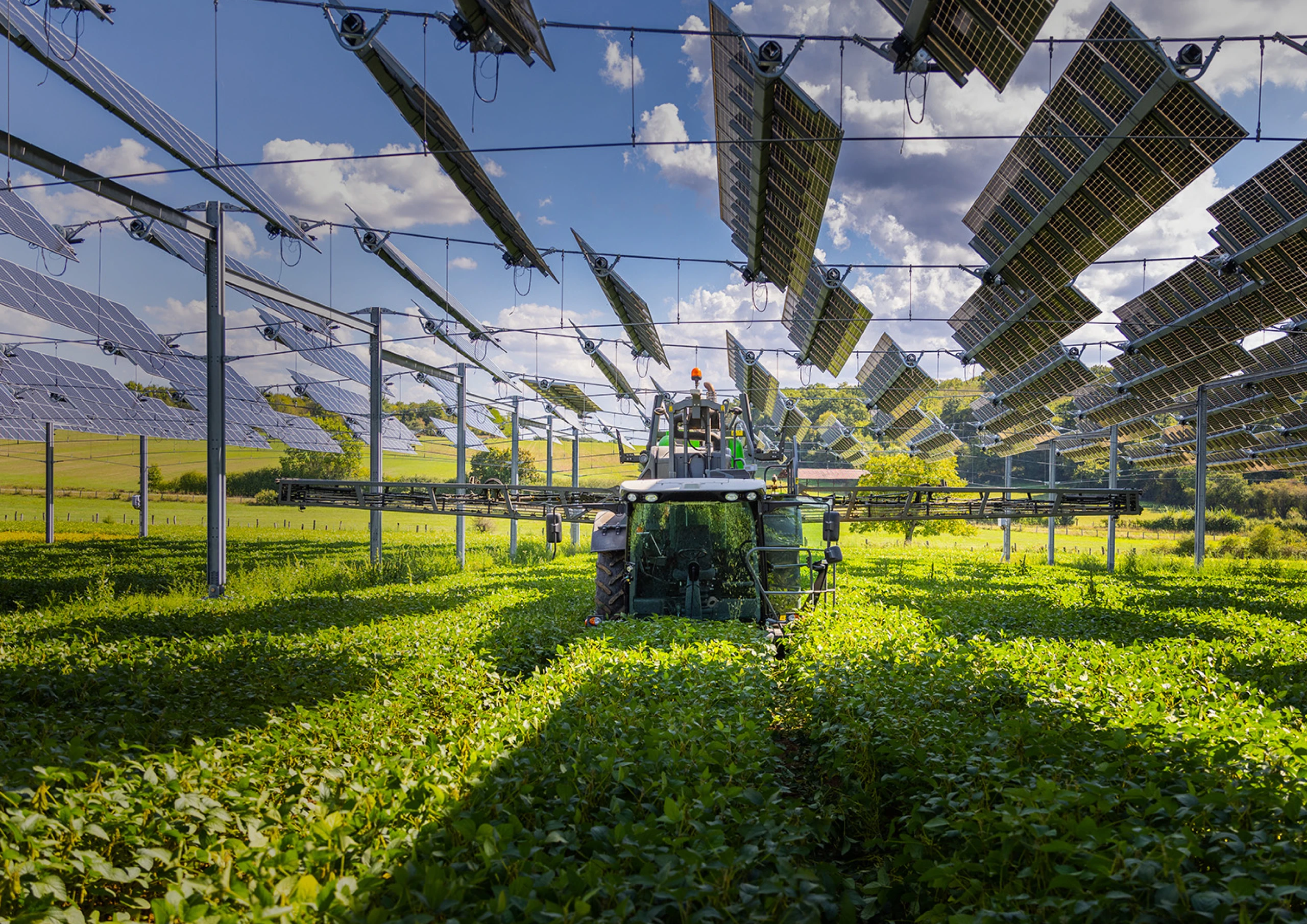
The solar panels installed above the crops playa protective role in the face of climatic hazards: they attenuate the temperature variations supported by plants and limit their exposure towater stress. At the Amance site, in Haute-Saône, surveys carried out in 2022 on soybean cultivation showed a 57% reduction in periods of water deficit during the crop cycle. Results confirmed in 2023 and 2024 on the othersagrivoltaic demonstrators.
{{cta-2}}
Reduction of evapoperspiration
Less water needs thanks to the shading of the solar panels
The installation ofphotovoltaic panelsabove crops also makes it possible to reduce the water needs of plants. According to a study conducted by ADEME, this water consumption can be reduced by up to 30%. An advantage reinforced in the case of mobile systems, whose maximum vertical position allows for a homogeneous distribution of rainwater over the plot.Under the agricultural canopy of TSEFor example, extreme temperatures are mitigated andevapotranspiration in plantsis significantly reduced. As soon as the air temperature exceeds 20°C, a significant thermal difference is observed between the areas shaded bysolar panelsand the plots exposed in the open field. This differential becomes particularly valuable at 25°C, the threshold at whichheat stressdirectly affects the crop, especially when the grains are filled - a decisive phase in order to achieve the expected yields.
“Mi tincidunt elit id que quigula ca diam, amet. Vel etiam suspendisse morbi eleifend faucibus eget vestibulum felis.”
A microclimate that protects against frost, hail and wind
A thermal barrier against spring frosts
Agrivoltaic installations not only protect against hot weather: they also limit the risks associated with low temperatures. By partially keeping heat at ground level when temperatures drop, they contribute toreduce the risk of spring frost.
{{cta-3}}
Protection against bad weather
In addition, the physical structure of the panels provides additional protection against the weather, while playinga barrier role against hail and wind.
.webp)
.webp)